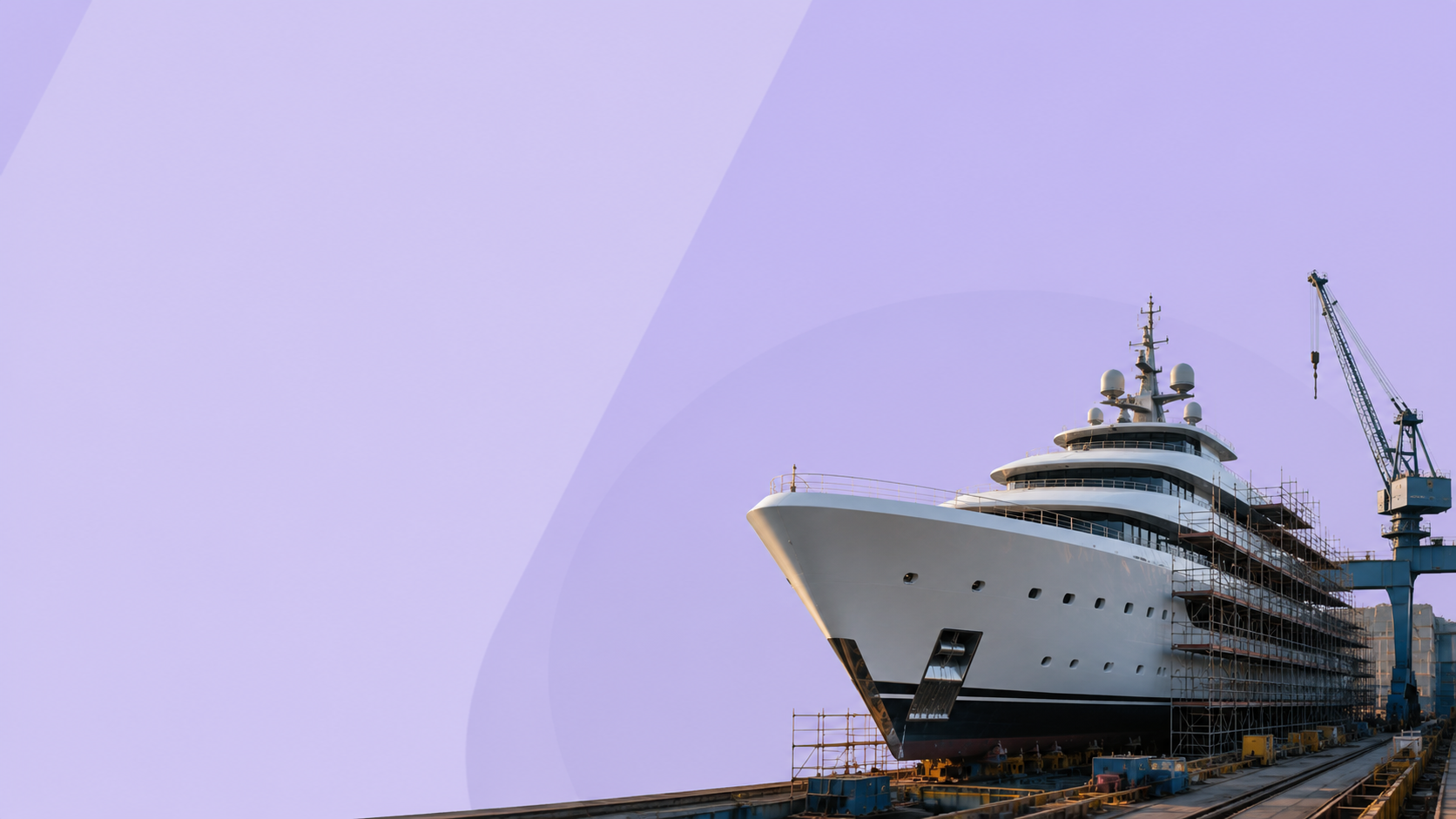
Companies in the shipbuilding industry know better than anyone that they operate in one of the most complex business environments there is. Building a superyacht is the perfect example of an Engineer-to-Order (ETO) organization: every product is unique, designed specifically for a single customer, and consists of thousands of interdependent activities, hundreds of suppliers, and a project timeline that often spans several years.
These characteristics make the way such businesses operate fundamentally different from companies engaged in repetitive or mass production.
The Challenges of Engineer-to-Order
In an ETO environment, almost everything is subject to change:
- Specifications evolve throughout the project.
- Engineering and production often run in parallel.
- Specialized expertise and capacity are limited.
- Multiple projects compete for the same people and resources.
- A delay in one area frequently creates a domino effect across other disciplines.
As a result, many organizations continuously struggle with:
- Longer project lead times
- Overloaded critical resources
- Frequent replanning
- Limited predictability
- Higher indirect costs
- Pressure on margins and profitability
Research shows that large project-based organizations continue to lose a significant portion of their productivity due to poor alignment between planning, resource capacity, and execution. Projects are often managed through separate schedules, reports, or even organizational silos, while the real bottlenecks exist within day-to-day operations. This leads to waiting times, multitasking, and unnecessarily high levels of work in progress, all of which translate directly into longer delivery times and higher costs.
Why Traditional Solutions Often Fall Short
Alongside CAD software and other engineering tools, many shipbuilders rely on a combination of ERP systems, spreadsheets, and traditional project scheduling software. These systems perform well when it comes to:
- Financial administration
- Progress reporting
- Contractual planning
- Documentation and compliance
However, they provide far less insight into questions such as:
- Which specialist will become the next capacity constraint?
- Which activities are competing for the same resources?
- Which decision made today will cause delays three months from now?
- Where will the next bottleneck emerge?
In an Engineer-to-Order environment, these are precisely the questions that determine whether a project is delivered on time or ends up running months behind schedule.
From Planning to Managing Flow
This is where Lynx-X makes the difference.
Lynx-X is more than just a planning solution. It is a platform designed around the real dynamics of complex project organizations: the availability of people and other resources, dependencies between activities, and the impact of bottlenecks on overall project flow.
Rather than focusing solely on tasks and deadlines, Lynx-X provides visibility into:
- Where critical capacity constraints exist
- How projects influence one another
- The consequences of changes before they occur
- Which priorities genuinely contribute to shorter lead times
When required, Lynx-X also orchestrates project execution, including task-level planning, communication, and coordination based on the right priorities.
The result is something that many Engineer-to-Order organizations struggle to achieve: predictable flow.
What Does This Mean for Operations?
For shipbuilders and other Engineer-to-Order companies, this can lead to:
- Shorter and more reliable delivery times
- Less replanning and fewer firefighting activities
- Better utilization of scarce specialists
- Lower work in progress
- Higher delivery reliability
- Lower indirect costs
- Improved margins and profitability
Perhaps even more importantly, Lynx-X connects departments, and if necessary their existing systems, that traditionally operate with separate plans. Engineering, project management, procurement, production, outfitting, and commissioning all gain a single, integrated view of reality, enabling faster and better-informed decision making.
The Next Step for Specialized Shipbuilding
As superyachts, offshore installations, and other highly customized projects become increasingly sophisticated, competitive advantage no longer comes solely from engineering expertise or craftsmanship. It increasingly depends on an organization’s ability to manage complexity effectively.
For Engineer-to-Order organizations, the question is no longer whether to digitalize, but how to manage projects more effectively through better flow, resource management, and predictability.
This is exactly where Lynx-X offers a new approach. Rather than being just another planning tool or reporting system, it provides a platform that makes the operational reality of complex project organizations visible and helps teams actively manage it. Ultimately, that can make the difference between a project that overruns and one that is delivered on time, predictably, and profitably.
